The Four Causes We See Most Often
An oversized unit. A system that is too big for the house blasts the space near the thermostat down to the set point in minutes, shuts off, and repeats. It cools the air fast but removes little moisture, so the house feels sticky. This is common after a like-for-bigger replacement where a larger unit was swapped in without checking what the ductwork could actually move.
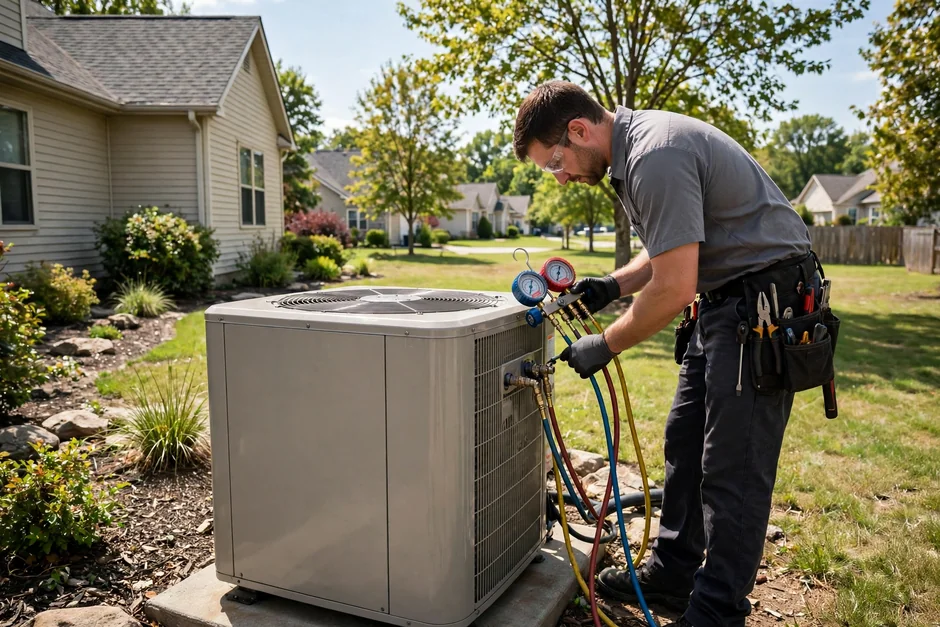
Low refrigerant. When the charge drops because of a leak, pressure switches can trip the compressor off to protect it. The unit restarts after pressures equalize, then trips again. Refrigerant does not wear out, so low charge always means a leak worth finding, which is the same point we make in our guide on why an AC stops cooling.
Restricted airflow. A clogged filter, a matted indoor coil, or blocked returns can overheat or freeze parts of the system and trigger safety shutoffs. This is the cheapest cause to rule out, so it is checked first on every call.
Thermostat placement and settings. A thermostat hit by afternoon sun, sitting above a heat producing appliance, or set with a very tight temperature swing can call for cooling in bursts. Short cycle timers and settings inside some thermostats can also be misconfigured after a DIY thermostat swap.
What Short Cycling Does Over a Season
| Effect | Why it happens | What you notice |
|---|
| Higher wear on the compressor | Starting draws the most current and stresses parts most | Hard starts, humming, a unit that struggles on hot afternoons |
| Poor humidity control | Moisture is removed during long, steady runs | Cool but clammy rooms, musty smells near vents |
| Uneven temperatures | Far rooms never get a full cycle of air | Hallway feels fine, bedrooms stay warm |
| Shorter system life | Hundreds of extra starts add up over a summer | Repairs arriving years earlier than expected |
Checks You Can Do Before Calling
- Time the cycles: Note run time and off time for half an hour. That timing helps a technician more than a general description.
- Replace the filter: If light does not pass through it, it is done. Give the system a few hours and watch the pattern.
- Look for ice: Ice on the indoor coil or the copper line means airflow or charge trouble. Switch to Fan to thaw and read our frozen coil guide.
- Check the thermostat spot: Is it in direct sun, over a lamp, or near the kitchen? Note it and tell us.
- Open your vents: Closing many vents to push air around often backfires by restricting airflow further.
What not to do: keep resetting a breaker or restarting a unit that trips. A safety switch that keeps opening is reporting a fault. In Lake Forest Estates, where many systems date to the subdivision building boom around 2004, we often find short cycling is the first visible symptom of an aging system losing charge. In Woodland Hills, shaded lots and long duct runs make airflow checks just as important. Either way, pressures, airflow, and cycle timing settle the cause, and a regular AC maintenance visit is where most of these are caught early.