24/7 Emergency Service  |  Mon-Fri 7AM-7PM  |  Sat 8AM-4PM  |  (615) 908-9378

Heating Safety · La Vergne Blog

Signs of a Cracked Heat Exchanger

Short answer: a cracked heat exchanger is uncommon but serious, because it can let combustion gases mix with your household air. The honest response is testing, not panic, and not pressure either.

Mon-Fri 7AM-7PM · Sat 8AM-4PM · 24/7 Emergency · Serving all of 37086

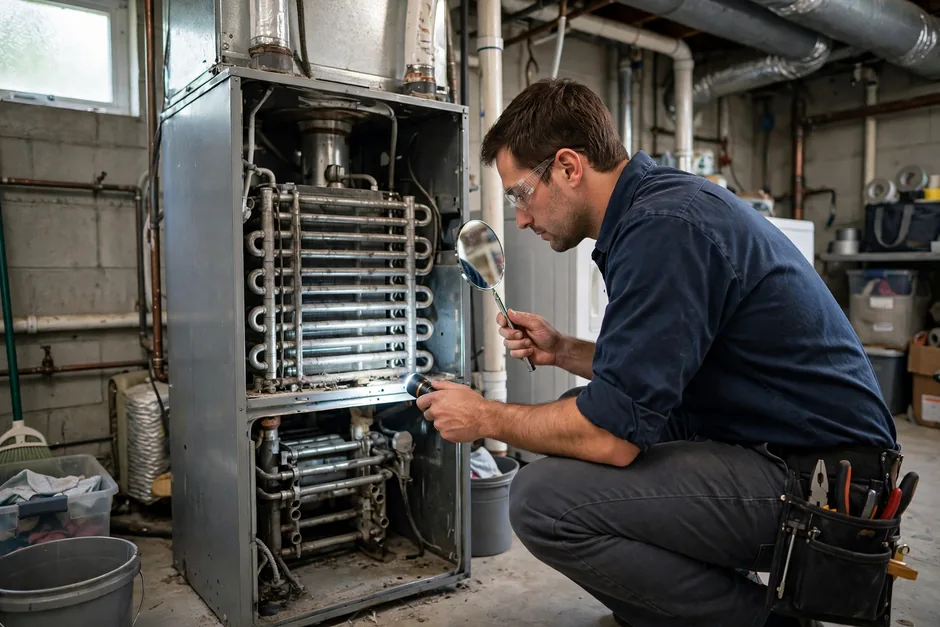
Technician inspecting a furnace heat exchanger with a flashlight and inspection camera in a La Vergne home

The heat exchanger is the metal wall inside your furnace that keeps fire and exhaust on one side and the air you breathe on the other. Burners heat the metal, your blower pushes household air across its outside, and exhaust goes up the flue. A crack in that wall breaks the separation, which is why this is the one furnace finding where shutting the system down is the correct call until the situation is fully understood.

We want to be straight about two things at once. First, cracked heat exchangers are not an everyday finding, and most furnaces in La Vergne finish their working lives without one. Second, when a crack is confirmed, it is not a part to watch or patch. The furnace stays off, and the real conversation is repair versus replacement of the furnace itself. Anyone who tells you a crack is certain without showing you evidence is skipping steps, and anyone who shrugs one off is skipping the safety part.

Older furnaces in Heritage Valley and Lake Forest Estates, many now well into their second decade, are where we check most carefully during furnace repair and fall tune ups. Age alone does not crack a heat exchanger, but years of heating and cooling cycles expand and contract the metal thousands of times, and that fatigue is what eventually opens cracks, usually near welds and bends.

Signs That Raise the Question

  • Soot or rust streaks inside the burner area or around the furnace cabinet, which can mean combustion is not behaving normally.
  • Flames that dance or roll when the blower starts, a classic sign that household air is disturbing the burner through an opening.
  • A carbon monoxide alarm sounding, or CO readings that rise when the furnace runs. Treat any alarm as real until it is cleared.
  • Repeated ignition or rollout problems, strange combustion smells, or a furnace that a previous company shut down without explaining why.
  • Visible cracks or holes found on inspection, sometimes only visible with the blower removed or with an inspection camera.

Just as important: headaches, nausea, or flu like symptoms that ease when you leave the house are a medical and safety issue first. Get out, call emergency services or the gas utility, and let the furnace questions wait until the house is cleared.

How the Condition Is Actually Tested

MethodWhat it showsLimits
Visual inspection with lights and mirrorsSurface cracks, rust through, and failed weldsOnly sees reachable surfaces
Inspection camera inside the exchangerCracks in cells and bends a mirror cannot reachNeeds access points or partial disassembly
Combustion analysisCO and combustion readings while the furnace runsAbnormal readings raise suspicion but do not locate a crack alone
Blower on flame observationFlames disturbed when household air starts movingA supporting sign, used with other evidence

A confirmed finding should come with evidence you can see: photos, camera footage, or the failed section itself. Ask for it. A trustworthy company shows you the crack, explains why the furnace cannot run, and then lays out the honest options, which usually means a new heat exchanger if the part exists and the furnace is young enough to justify it, or a new furnace when it is not. That decision fits the same framework as our repair or replace guide.

Why Shutdown Is the Right Call

Carbon monoxide is colorless and odorless, and a cracked exchanger can push it into the air your family breathes. That said, context matters: a small crack does not flood a house instantly, alarms exist for a reason, and most situations are caught during routine service with nobody harmed. The balanced response is respect, not fear. Furnace off, windows and fresh air if CO is suspected, working CO alarms on every level, and a proper inspection before the furnace runs again. Fall HVAC maintenance includes the visual checks that catch exchanger problems while they are still findings on a clipboard instead of alarms at midnight.

All Makes & Models

Brands We Service

CarrierTraneLennoxGoodmanRheemRuudYorkBryant

Don't see your brand? We work on many more. See the full Brands We Service list or call and ask.

Frequently Asked Questions

What are the first signs of a cracked heat exchanger?

Common signs include soot or rust inside the burner area, flames that waver when the blower starts, repeated ignition problems, and carbon monoxide alarms or readings that appear when the furnace runs. Many cracks are found on inspection before any symptom shows.

Can a cracked heat exchanger be repaired?

The metal itself is not patched. Options are replacing the heat exchanger part, when it is available and the furnace is young enough to justify the labor, or replacing the furnace. A confirmed crack means the furnace should stay off until one of those happens.

How dangerous is a cracked heat exchanger, honestly?

It is serious because it can let carbon monoxide into household air, and CO gives no warning by smell or color. It is also usually caught during service before anyone is harmed. Working CO alarms and prompt shutdown make the risk manageable, which is why we explain rather than scare.

How does a technician confirm a crack?

With evidence: visual inspection with lights and mirrors, an inspection camera inside the exchanger cells, combustion readings, and watching the flames when the blower starts. Ask to see the photos or footage. A confirmed crack can be shown to you.

What should I do if my CO alarm goes off?

Get everyone out of the house, then call emergency services or the gas utility from outside. Do not run the furnace again until the house is cleared and the furnace is inspected. Then call (615) 908-9378 for the furnace side of the repair.

Ready When You Are

Need HVAC Help in La Vergne?

One call gets a real technician on the way. Mon-Fri 7AM-7PM, Sat 8AM-4PM, and 24/7 for emergencies.

Call Now · (615) 908-9378

125 Centennial Dr, La Vergne, TN 37086

Tap to Call (615) 908-9378