Humidity: The Hidden Half of the Bill
Your AC removes moisture as it cools, but an oversized system that short-cycles, a dirty coil, or constant fan operation can leave air cool and damp. Damp air feels warmer, so you lower the thermostat, and the meter spins longer. Steady run times, a clean coil, and the fan on Auto, which lets moisture drain off the coil between cycles, all help. Homes near the lake that still feel clammy may need dedicated dehumidification as part of the indoor air quality plan.
Thermostat Habits That Actually Save
- Set it and let it work: Big manual swings make the system recover at full power. Use a programmable or smart schedule with gentle changes.
- Modest setbacks: A few degrees while you are at work or asleep saves runtime without a painful recovery. Heat pumps need smaller setbacks, since deep setbacks can trigger costly backup heat.
- Fan on Auto: In summer, Auto wrings more moisture out. On can re-evaporate water off the coil back into the house.
- Use ceiling fans for people, not rooms: Fans cool skin, not air. Run them in occupied rooms and off in empty ones.
Ducts, Filters, and the Envelope
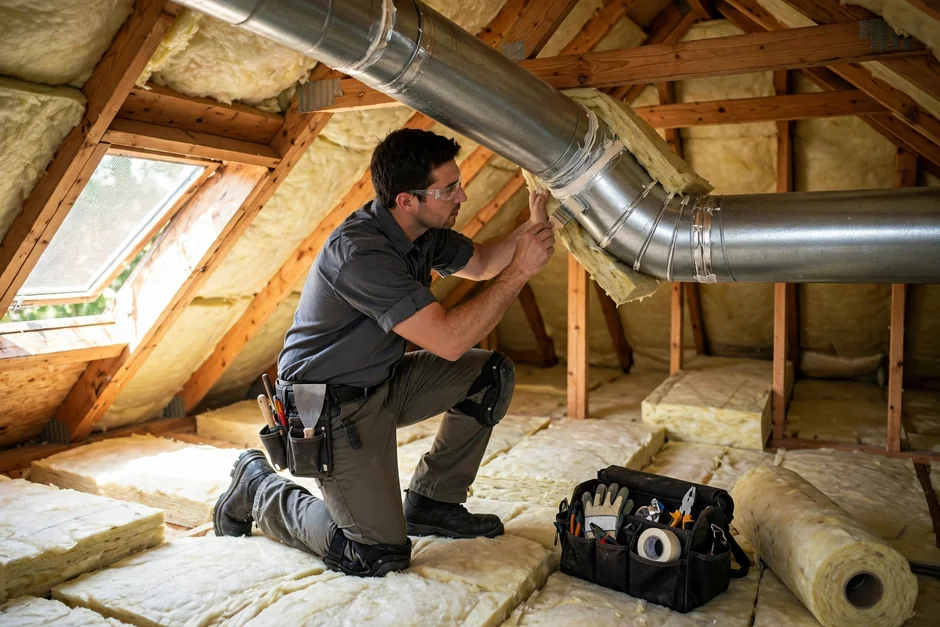
Leaky crawlspace ducts pay to cool the crawlspace. Sealing them is often the highest return fix we recommend, ahead of new equipment. Clean filters and coils cut the effort every cycle takes. On the house side, attic insulation, shaded west windows, and sealed gaps around doors trim the load the system fights all afternoon. Our ductwork and HVAC cost guide pages walk through how we weigh these fixes.
| Step | Cost level | Why it helps in La Vergne |
|---|
| Filter on schedule | Low | Restores airflow, shortens run times |
| Duct sealing | Moderate | Stops paying to condition the crawlspace |
| Coil cleaning and tune-up | Low to moderate | Better heat transfer and dehumidification |
| Thermostat schedule | Low | Cuts runtime while the house is empty |
| Dehumidification | Moderate | Comfort at a higher set point near the lake |
Neighborhoods from Lake Forest Estates to Cedar Grove share the same summer pattern, so the same order works: airflow, ducts, humidity, habits, then equipment. When equipment does reach replacement age, high efficiency ratings pay back faster in our long cooling season, and our rebates and tax credits guide explains where to verify current incentives.